



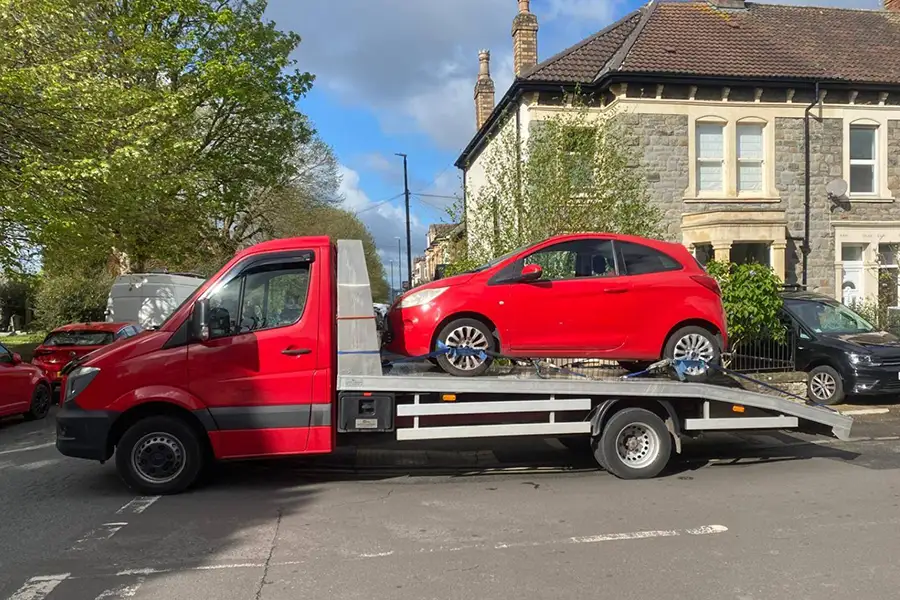
For DVLA scrap car Bristol guidance, Scrap Cars and Vans Bristol helps local keepers understand each stage of an end-of-life vehicle collection. Removing an unwanted car or light van from your property is only the visible part of the job. Behind the collection sits an official process designed to record the change, protect the registered keeper and ensure hazardous vehicle materials are handled responsibly.
Following that process gives you evidence that the vehicle is no longer your responsibility. Skipped paperwork, unclear ownership or disposal through an unlicensed operator can cause problems long after the vehicle has disappeared. Bristol motorists can use this checklist to understand each stage of a compliant DVLA scrap car Bristol service.
Confirm that you can authorise disposal
Begin by making sure you have the right to dispose of the vehicle. Being named as the registered keeper on the V5C is important, although the V5C does not by itself prove legal ownership. Finance agreements, company ownership, bereavement and disputes between joint users may all require extra checks.
Explain anything unusual when requesting your quotation. Scrap Cars and Vans Bristol may ask for identification, proof of address or supporting authority before booking the recovery. Resolving those points early prevents the DVLA scrap car Bristol procedure from being interrupted when the driver arrives.
Use an authorised treatment route
End-of-life vehicles contain oils, fuel, batteries and other substances that need controlled treatment. Disposal must therefore lead to an Authorised Treatment Facility, usually called an ATF. At the facility, the vehicle can be depolluted before metals, reusable items and other materials are separated.
Official GOV.UK advice tells vehicle owners to use an ATF when scrapping a vehicle. Asking where your vehicle is going is entirely reasonable. A trustworthy DVLA scrap car Bristol provider should be able to describe the authorised route rather than offering an unexplained collection with no meaningful record.
Deal with the V5C and DVLA notification
Prepare the V5C log book before collection if it is available. Current government instructions say it should be given to the ATF, while the keeper retains the yellow section for selling, transferring or part-exchanging the vehicle to the motor trade. The DVLA must also be told that the vehicle has gone to an ATF.
Review the registration, keeper address and document details for accuracy. Where the log book is missing, notify Scrap Cars and Vans Bristol before the appointment because alternative evidence may be required. For vehicles transferred without a V5C, GOV.UK provides a postal reporting method that allows the DVLA scrap car Bristol record to be updated correctly.
Keep your Certificate of Destruction
After complete destruction, the ATF should issue a Certificate of Destruction for a car, light van or qualifying three-wheeled vehicle within seven days. The certificate shows that the vehicle entered the recognised disposal system and that the DVLA can remove it from the active registration record.
Store this document with the collection receipt, quotation and retained V5C section. Without suitable proof, you could face difficulty showing when responsibility ended if tax or traffic penalties later arise. Proper documentation is therefore a central benefit of using a legitimate DVLA scrap car Bristol service.
Protect tax, insurance and private registrations
Once the DVLA receives the required notification, vehicle tax is cancelled and any tax paid by Direct Debit should stop automatically. A refund is normally sent for each complete unused month, calculated from the date the DVLA receives the information. Prompt reporting can therefore prevent an unnecessary reduction in the refund.
Contact the insurer separately when disposal has been confirmed, especially if a claim remains open. Owners wishing to keep a personalised registration must arrange retention or transfer before destruction. Mentioning both matters in advance helps the DVLA scrap car Bristol collection proceed without losing an important registration or disrupting an insurance claim.
Disclose damage and missing components
Tell the collector whether major parts such as the engine, wheels, gearbox, catalytic converter or substantial body panels have been removed. An ATF may charge when essential components are absent, and the quotation may change because less recyclable material remains.
Report accident write-offs honestly as well. When an insurer has taken ownership or control of the salvage, independent disposal may not be permitted. Clarifying the position before arranging DVLA scrap car Bristol recovery protects everyone involved.
Book a responsible Bristol collection
Scrap Cars and Vans Bristol collects unwanted vehicles from accessible homes, workplaces, garages and storage locations across the local area. Share the registration, condition, collection address, access limitations and paperwork position when asking for a quotation.
Choosing a properly documented DVLA scrap car Bristol service gives you more than a convenient removal. It provides a traceable route from collection to authorised treatment. Contact Scrap Cars and Vans Bristol to discuss your car or van and arrange an appropriate collection.
Useful external sources